


Choose 42CrMo stump grinder bolts with brazed YG8/YG11 carbide tips for abrasive soil and stones, with fit confirmation, custom service and B2B bulk supply...
Choosing the right carbide-tipped tooth helps stump grinder manufacturers, distributors, repair shops and land-clearing contractors match replacement parts to real cutting conditions. The main choice is usually between YG8/YG8C for wear-dominated work and YG11/YG11C for applications with more severe impact. Grade selection should be considered together with tooth-body material, carbide quality, brazing, mounting dimensions and machine setup.
Product Overview and Construction
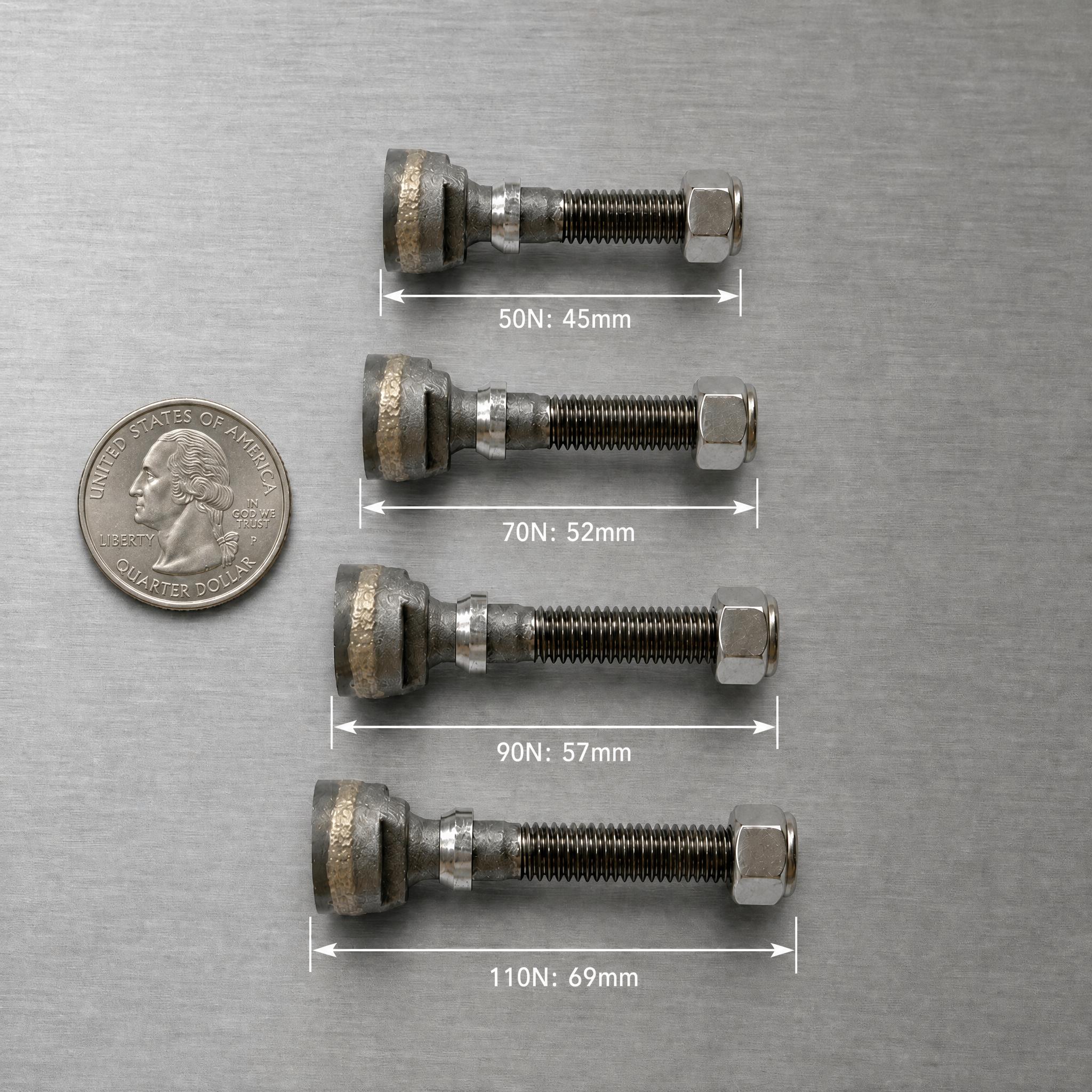
Carbide-tipped stump grinder teeth are replacement cutting components for compatible stump grinding and stump removal equipment. The assembly normally combines a heat-treated alloy steel tooth body with a brazed tungsten carbide cutting tip. A typical configuration uses a 42CrMo steel body with a reference heat-treatment hardness range of HRC 42-55 and a YG8 or YG11 carbide head with a reference hardness range of HRA 89-90. These are product reference values, not a claim that every batch has one fixed test result.
The steel body provides the shank and mounting section, while the carbide tip forms the wear-facing cutting edge. The tip is designed for contact with wood, roots, soil, sand and, depending on the selected grade, harder materials such as stones or masonry fragments. Dimensions, thread, tooth profile, tip geometry and mounting details should be confirmed from the equipment model, drawing or existing sample before production.
Start by identifying what normally enters the cutting zone. Ordinary soil, tree roots and wood generally create a wear-focused application. Soil containing frequent stones, bricks or construction debris creates more interrupted impact and a higher risk of edge chipping. A similar-looking tooth or machine brand is not enough to determine the correct carbide grade.
The table is a selection guide, not a performance guarantee. When abrasion and impact are both severe, approve a sample in the intended machine and review the wear pattern before a large order.
When to Choose YG8 or YG8C
YG8, also described as YG8C in coarse-grain carbide product descriptions, is generally suitable for ordinary soil, tree roots and wood where abrasion is the primary failure mode. Its wear resistance can help the cutting edge retain a usable profile for a longer working period when hard debris is limited. It is therefore relevant to routine landscaping, general stump removal, municipal maintenance and distributor replacement inventories.
The limitation is repeated hard-object impact. If the cutting wheel often strikes large stones, brick fragments or hidden construction debris, YG8 may not provide the impact and edge-chipping resistance required by the application. In that situation, review YG11/YG11C or another approved configuration. Check the tooth projection, mounting fit, cutting-wheel condition and operating method as well; a carbide grade cannot correct an incorrect tooth configuration.
When to Choose YG11 or YG11C
YG11, also described as YG11C in coarse-grain carbide product descriptions, is intended for applications with more severe intermittent impact. It can be considered where stump grinding involves rocky soil, frequent stones, bricks, masonry fragments or building debris. In these conditions, impact tolerance and resistance to edge chipping may be more important than maximizing wear resistance in clean, abrasive soil.
YG11 is not automatically the longest-wearing option. Where work is mainly wood, roots and abrasive soil with limited hard debris, its edge may wear and dull faster than YG8/YG8C. Buyers should select YG11 for a real impact requirement rather than treating it as a universal upgrade. For recurring supply, compare a sample under the intended operating method and record edge condition, tooth-body condition and inspection requirements.
Carbide quality involves more than the grade name. Virgin Tungsten Carbide means newly produced tungsten carbide rather than an unspecified recycled source. When material consistency matters, buyers should state this requirement in the quotation, drawing or sample approval record. Grade, cobalt content, grain size, tip geometry, sintering control and inspection should be considered together; a grade label alone does not prove identical composition or service behavior between suppliers.
The C suffix in YG8C and YG11C is commonly used to describe a coarse-grain or application-oriented carbide variant. Coarse-grain carbide may be considered where greater toughness and impact tolerance are needed, but the exact composition and naming convention should be confirmed with the supplier. A C-series label cannot compensate for poor tip support, unsuitable geometry or incorrect mounting.
Brazing quality is equally important. The joint requires a suitable contact surface, controlled heating, correct alignment, appropriate brazing material and controlled cooling. Incomplete bonding or excessive residual stress can increase the risk of carbide separation. For custom B2B orders, specify the tip position, support area, brazing requirements and acceptance criteria. Inspect delivered teeth for separation, edge chipping, abnormal rounding and shank damage.
YG Carbides Compared with YT5 and YT15
YG and YT are different cemented-carbide families and should not be treated as interchangeable. YG grades are commonly used where a balance of wear resistance and toughness is required. YT5 and YT15 are titanium-carbide-containing grades associated with different cutting conditions. They are not suitable choices for stump grinder teeth exposed to wood, roots, soil, sand and repeated stone or masonry impact.
A stump grinder replacement specification should therefore review an appropriate YG-series option, such as YG8/YG8C or YG11/YG11C, according to the actual worksite. Listing YG and YT grades together without explaining their application can lead buyers to assume that all grades are direct substitutes.
Equipment and Application Fit
These teeth are intended for compatible stump grinder and stump removal equipment used in landscaping, land clearing, roadside maintenance, rental service and engineering projects. Green Teeth 500 and 700 series can be used as common market application examples when discussing replacement configurations. This reference does not indicate that the replacement tooth is made by or affiliated with the brand owner, and it does not confirm fit across every machine model.
Before approval, provide the machine brand and model, cutting-wheel arrangement, tooth series, existing part number, tooth profile, mounting or thread details, key dimensions and a clear sample or drawing. A series name or product photo alone cannot replace dimensional confirmation.
Custom carbide-tipped stump grinder teeth can be developed from a buyer's drawing, sample or equipment information. Available customization may include tooth-body geometry, length, mounting details, carbide grade, YG8C or YG11C coarse-grain requirement, tip shape, brazing arrangement, surface finish, identification marking and packaging. OEM/ODM support can be provided for customer-approved replacement-part specifications and equipment programs; it does not imply original-brand status or authorization.
For a quotation or sample review, send:
Machine model, tooth series and cutting-wheel type
Tooth profile, dimensions, mounting or thread details and carbide position
Required grade: YG8/YG8C or YG11/YG11C, with the reason for selection
Virgin Tungsten Carbide or material documentation requirements
Soil, root, wood, stone, brick and construction-debris conditions
Sample quantity, expected bulk quantity, packaging and labeling needs
Brazing, inspection and acceptance requirements
For ordinary soil and root cutting, begin the review with YG8/YG8C when wear resistance is the main priority. For frequent stones, bricks or building debris, review YG11/YG11C when impact resistance is more important. If both conditions are severe, confirm the configuration through a sample and application review before approving regular production.
Send the equipment information, drawing or existing tooth sample for fitment review, customized specification and bulk B2B quotation. The objective is to match the carbide grade, steel body, brazed joint and mounting configuration to the intended stump grinding application rather than promise one universal tooth for every worksite.
Copyright © 2025-2026 https://www.agrimaxagriculture.com All Rights Reserved Cangzhou Agrimax Agricultural Machinery Parts Co., Ltd.